
ARYA - Attracting and Retaining Youths in Agriculture
Agriculture in India is now managed significantly by rural women and old aged farmers as rural youth migrate to urban areas for employment. This brings unwarranted pressure on urban bases and depletion of potential human resource from rural areas. However, there is tremendous scope to make agriculture income and employment oriented. In such scenario, rural youth can play crucial role in augmenting agricultural growth through improving resource use efficiency and value addition across the value chain.
There are challenges in empowering the youth to improve their skills and to remain in the agriculture as a source of livelihood in rural situation. Creation of successful economic models in the villages is crucial to catalyze and energize youth to become entrepreneurs in rural areas and guide others in their vicinity. Creating interest and building confidence among rural youth in agriculture, is difficult but not impossible, as the available evidences of profitable agriculture have proved under varied situations. Retaining youth in agriculture, is therefore strongly linked to agriculture. There is a noticeable increase in the migration of rural youth to urban areas, in search of better livelihood opportunities due to the apparent differences in basic amenities, communication, health and education facilities between rural and urban areas.
Realizing the importance of rural youth in agricultural development, the Indian Council of Agricultural Research has initiated a project on “Attracting and Retaining Youth in Agriculture” (ARYA) in 25 States through KVKs. Under this scheme, special efforts are being taken up to attract the rural youth under the age of 35 years in agriculture to provide income generating opportunities and engage them in agriculture.
Objectives:
- To attract and empower the youth in rural areas to take up various activities in agriculture and its allied sector enterprises for sustainable income and continuous employment.
- To establish network groups among the youths to take up resource and capital intensive activities like production, processing, value addition and marketing.
- To demonstrate backward and forward linkage with different institutions and stakeholders for convergence and opportunities available under various schemes/ program for sustainable development of youths.
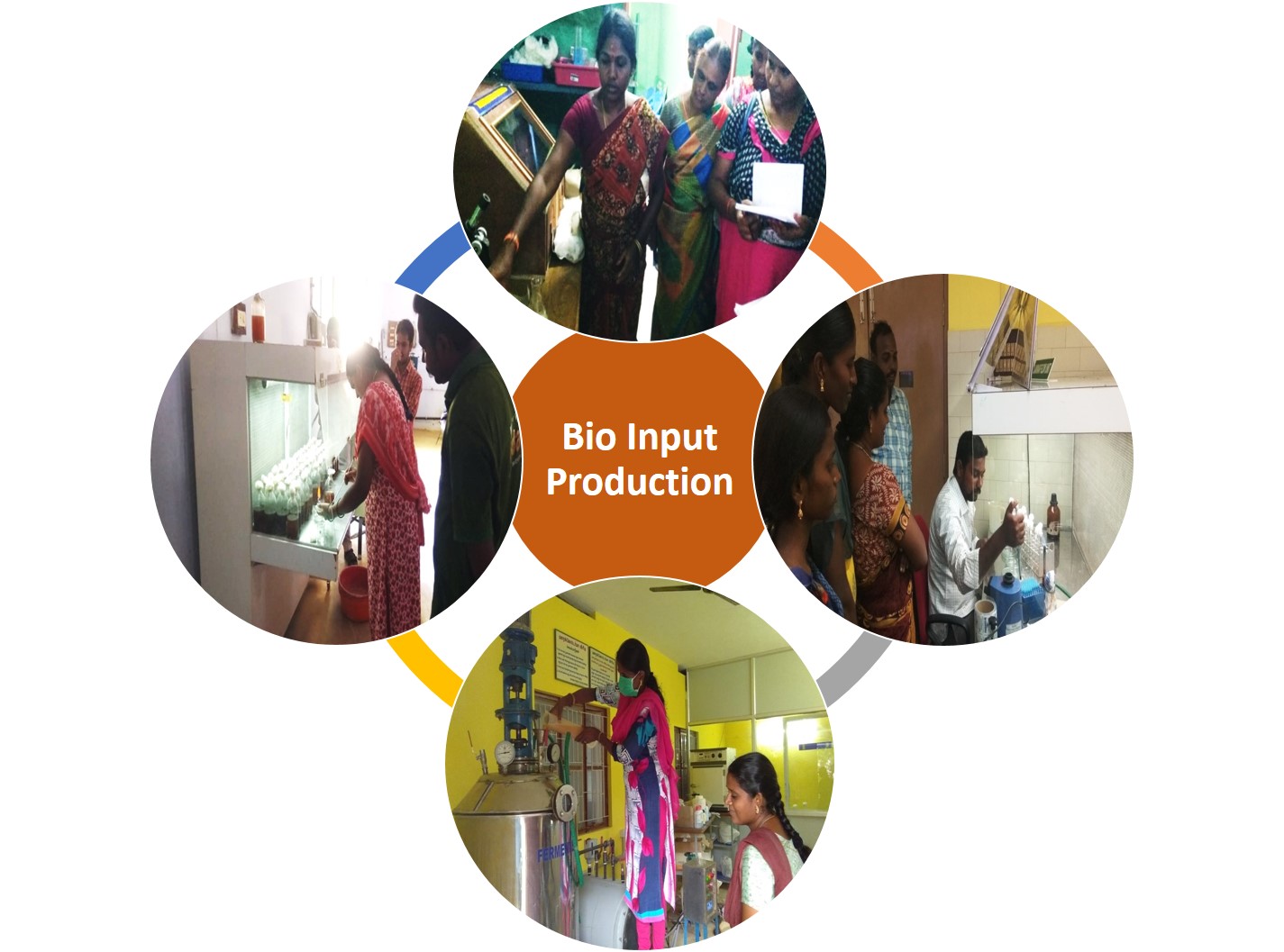
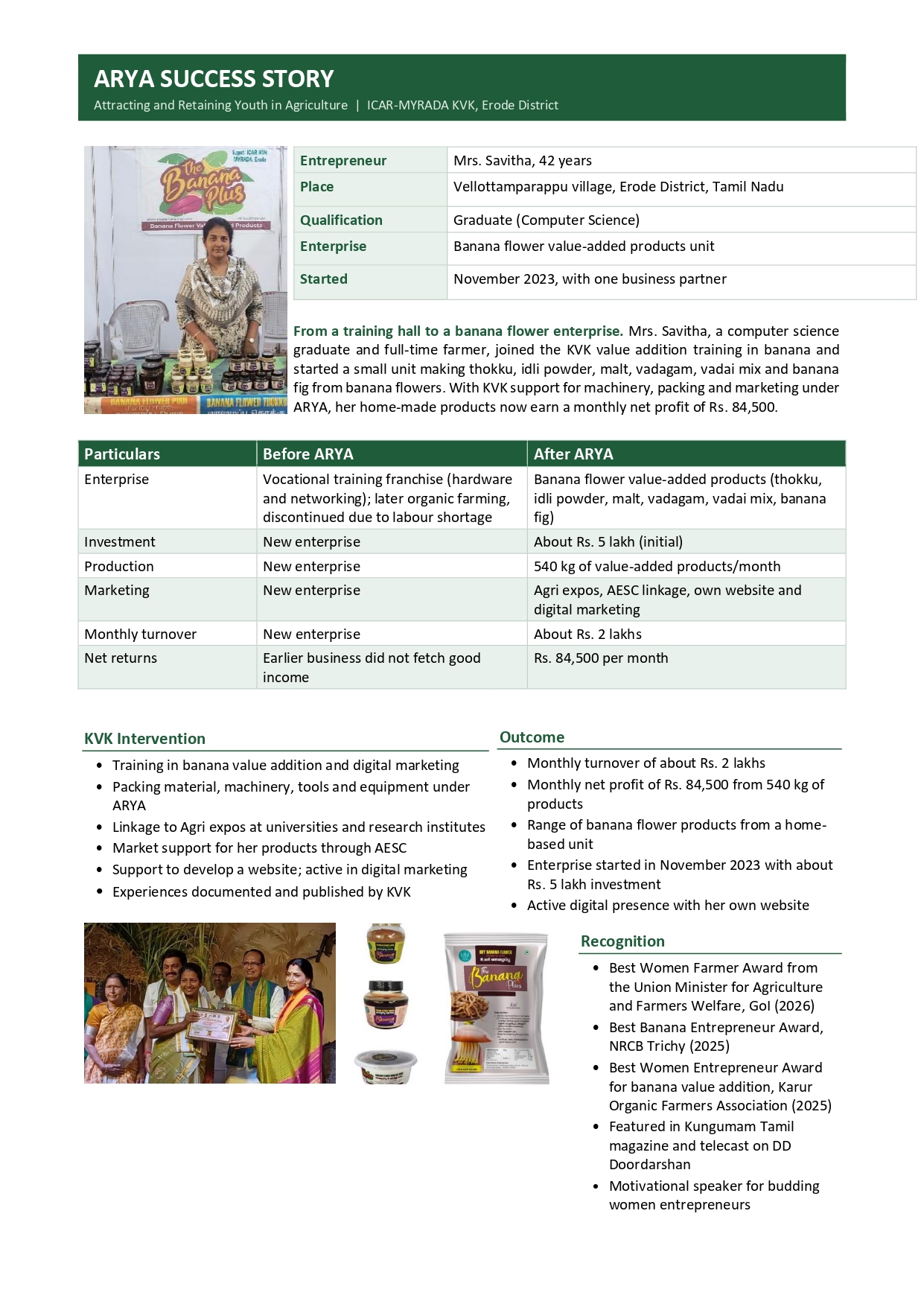
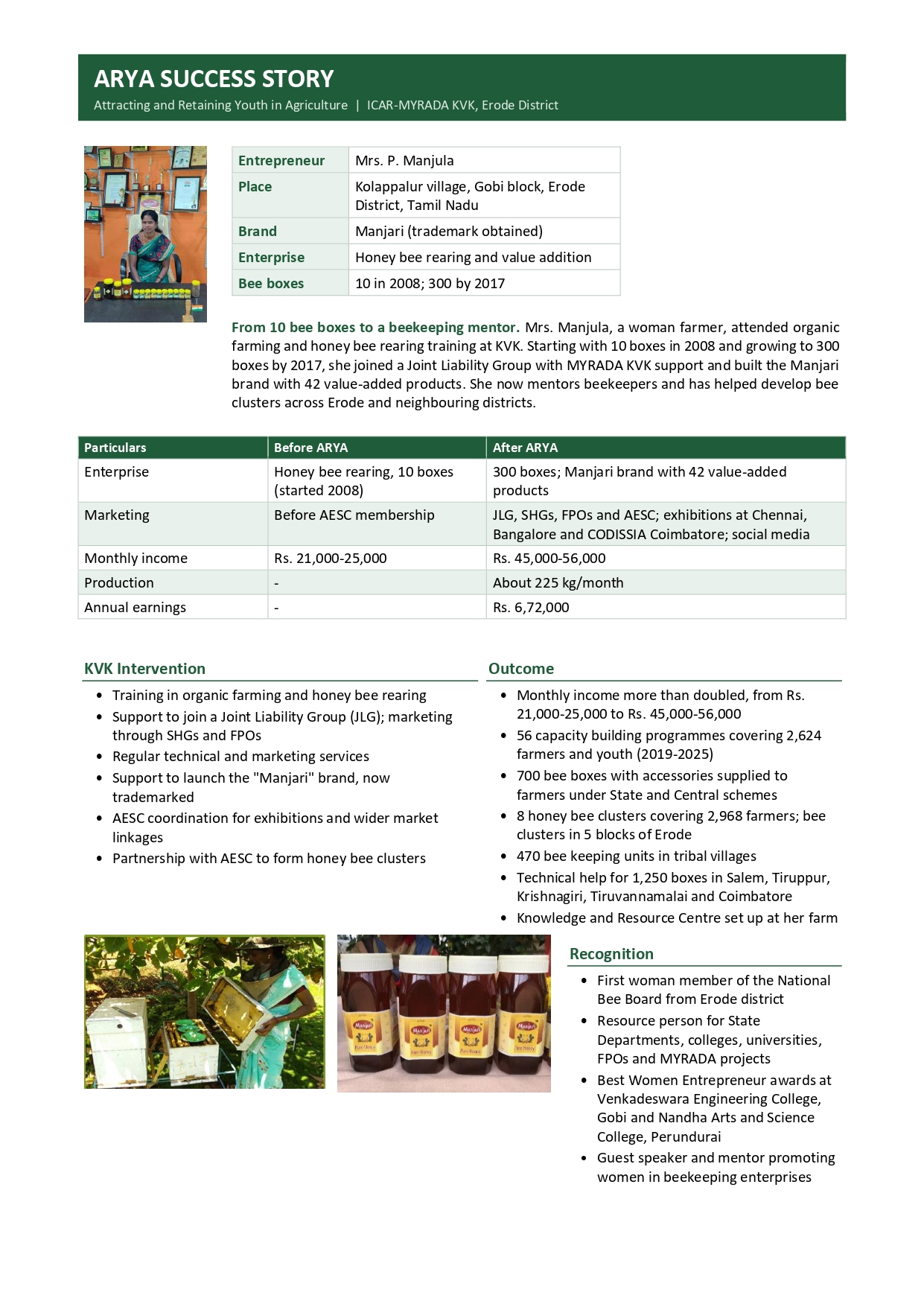
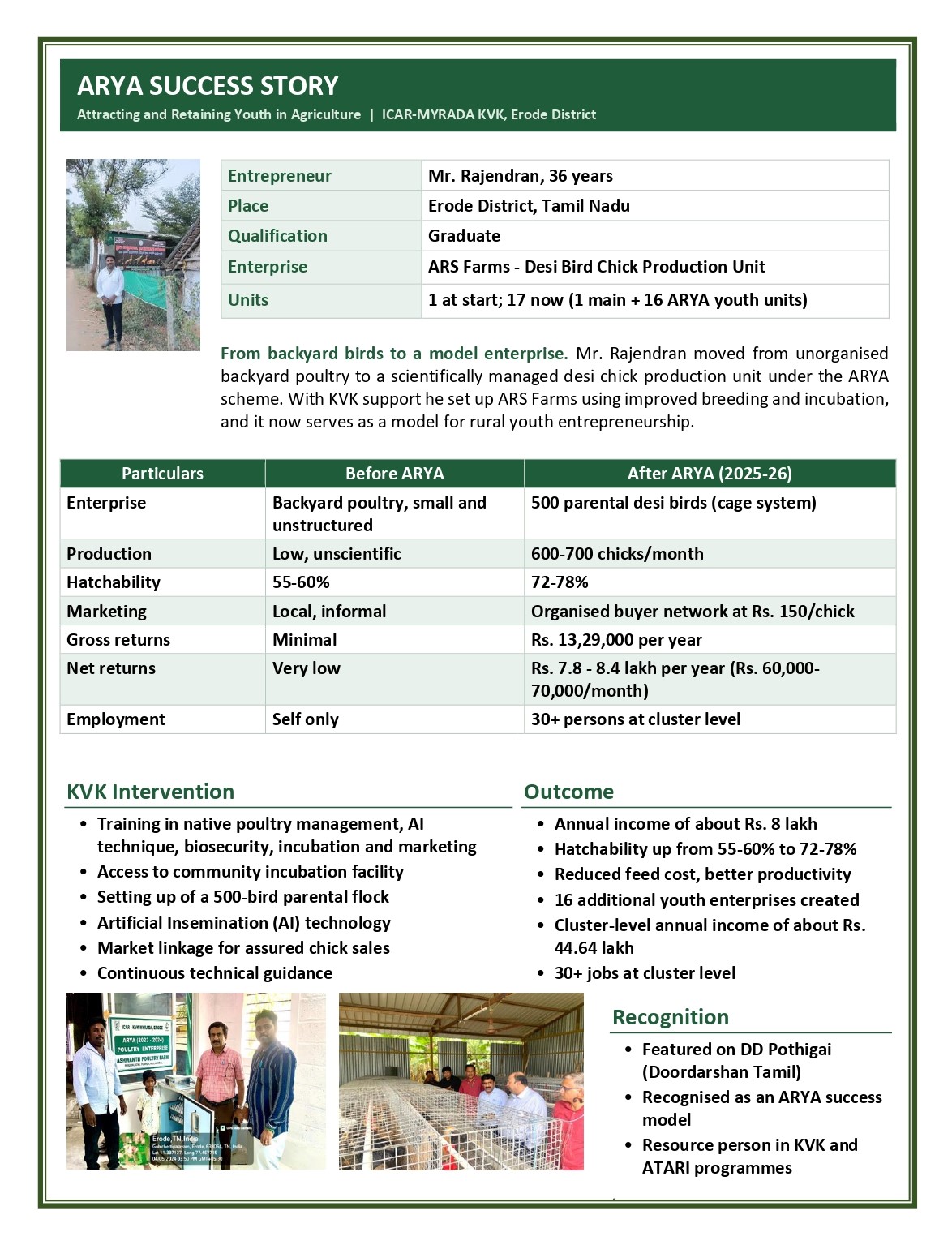
ICAR KVK MYRADA implementing the ARYA Programme from the year 2018-19 to 2025-26 with different enterprises to attract and empower the youths in agriculture in Erode district of Tamilnadu.


 Visit Today : 76